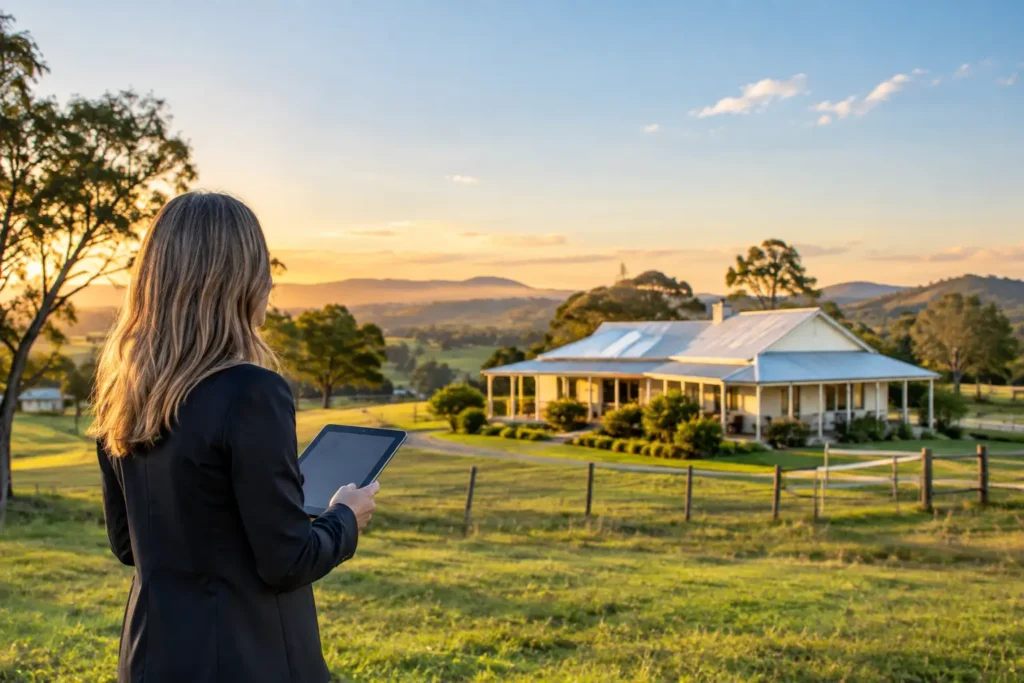
A rural property can be worth far more than its bedroom count and land size suggest. A productive paddock, reliable water, usable sheds, privacy, access and the right lifestyle story can all shift buyer perception and price. That is why knowing how to market rural property is not about putting it online and waiting. It is about presenting the asset properly, targeting the right people and creating enough competition to make serious buyers act.
For Sunshine Coast hinterland and acreage owners, the buyer pool is often broader than it first appears. Your best buyer may be a local family seeking space, a coastal owner moving inland, an equestrian buyer, a small-scale producer or a Brisbane purchaser looking for a weekend escape. Each sees value differently. A strong campaign speaks to the property’s real strengths without making inflated claims.
Start with the property’s commercial and lifestyle value
Rural and rural-residential buyers make decisions with both emotion and logic. They want to picture morning coffee on the verandah, room for the kids and a quieter life. They also want straight answers about water, access, fencing, land usability, services and ongoing maintenance.
Before marketing begins, identify what genuinely makes the holding valuable. That may include usable acreage, pasture quality, creek frontage, dams, bore water, established fruit trees, a machinery shed, horse infrastructure, a second dwelling, road frontage or proximity to a township. Not every feature matters to every buyer, but the right features matter a great deal to the right buyer.
Be precise. “Private acreage” is vague. “Usable cleared land with dam water, fenced paddocks and all-weather access” gives a buyer something concrete to assess. If the property has limitations, deal with them honestly too. Steep land, flood overlays, easements, unsealed access or ageing infrastructure do not make a property unsellable. They affect who the likely buyer is and how the price should be positioned.
A good agent will inspect the property beyond the house. They should understand how the land is actually used, where the water comes from, how vehicles enter, what can be heard from the boundary and what the buyer will see during an inspection. That groundwork prevents expensive surprises later in the campaign.
Price for enquiry, not wishful thinking
The fastest way to lose momentum is to launch at a figure the market will not support. Rural sales can have fewer directly comparable transactions than suburban homes, so it is tempting to pick a number based on what a neighbour achieved or what the owner needs to buy next. Neither is a pricing strategy.
The right price guide reflects recent comparable sales, but it also adjusts for land usability, improvements, location, presentation and buyer demand. Ten acres of largely usable land near amenities is not equivalent to ten steep or heavily timbered acres. A well-built shed with three-phase power may have genuine value to one buyer group, while a resort-style pool may matter more to another.
The aim is to attract qualified enquiry early, when the listing is new and buyers are paying attention. Strong enquiry gives you the best chance to generate competition. Overpricing can leave a property sitting on the market, inviting buyers to assume something is wrong or that the seller will eventually discount.
There are times when a premium guide is justified, particularly for a scarce or highly improved holding. The difference is that the premium must be supported by the property and the campaign must clearly demonstrate why.
How to market rural property with better visuals
Photography is not a box to tick. On acreage, it is the first inspection. Buyers need to understand the scale of the land, the relationship between the home and improvements, the condition of the grounds and the wider setting before they commit to a long drive.
Professional photography should show the property at its best, but it also needs to tell the truth. Wide images of key paddocks, sheds, driveways, water sources, entertaining areas and views help buyers assess whether the property suits their plans. Interior images still matter, especially where a buyer is comparing lifestyle properties rather than purely agricultural land.
Drone photography and video can be especially effective when used with purpose. They can show land contours, access points, fencing, the position of the house, nearby bushland and the distance to services. Aerial footage should clarify the offering, not simply create a glossy montage.
Preparation has a direct impact on the result. Mow around the home and sheds, remove unused equipment where practical, clear rubbish, tidy fence lines and make access easy. If livestock is on the property, ensure the inspection route is safe and presentable. You are not trying to make a working property look like a display village. You are showing buyers that it has been cared for and can be understood at a glance.
Write copy that answers real buyer questions
Generic phrases such as “rare opportunity” and “must inspect” do not sell rural property on their own. Buyers want useful information early. The marketing should explain the land size, zoning where relevant, water arrangements, access, key improvements and the kind of lifestyle or use the property may suit.
Care is needed around potential use. Do not imply subdivision, commercial activity, additional dwellings or agricultural potential unless it is supported by the relevant approvals and regulations. Clear, accurate language protects the seller and builds trust with buyers.
The strongest copy combines facts with a credible picture of daily life. It may explain that the home is positioned for privacy while still being within practical reach of schools, shops or the coast. For a Sunshine Coast hinterland property, that balance is often central to the appeal. Buyers want space, but they do not always want isolation.
Target the buyers most likely to compete
A broad online campaign is necessary, but it should not be the whole plan. Rural property needs deliberate buyer targeting. Your agent should contact active acreage and lifestyle buyers already in their database, speak with buyers who missed comparable properties and use the campaign material to reach people beyond the immediate suburb.
Different features should be emphasised depending on the likely purchaser. A family may respond to usable lawn, school access and a separate teen retreat. An equestrian buyer will look harder at fencing, arena space, stables and riding access. A buyer moving from the coast may care most about privacy, views, a pool and room for guests.
This is where local knowledge matters. An agent who understands buyer movement between coastal suburbs, hinterland villages and acreage pockets can market beyond a postcode without losing the detail that makes the property credible.
Make inspections easy and useful
Rural inspections take more planning than a suburban open home. Buyers may travel a considerable distance, need time to walk the land or want to bring a builder, parent or adviser. Restrictive inspection times can cost you genuine purchasers.
Provide clear arrival instructions and make the first impression simple. If the driveway is long, signage should be visible. If there are gates, livestock or uneven ground, buyers should know what to expect. During the inspection, allow enough time for questions about water, services, boundaries, maintenance and any inclusions.
Good buyer follow-up is where many campaigns are won or lost. Every serious enquiry should be qualified and contacted promptly. The agent needs to find out what the buyer liked, what is holding them back and whether another inspection could move them forward. Silence is not a strategy.
Protect your position in negotiation
Marketing creates interest. Negotiation converts it into the best available outcome. Rural buyers may make offers subject to finance, building and pest inspections, due diligence, water testing or the sale of another property. These conditions are not automatically a problem, but they need to be managed carefully.
The strongest negotiating position comes from having multiple informed buyers, a realistic price strategy and a seller who knows their priorities before offers arrive. Is settlement timing critical? Are certain farm items included or excluded? Would you accept a lower price for fewer conditions? These decisions are easier to make before the pressure is on.
Avoid reacting emotionally to the first offer, whether it feels low or high. Assess the full terms, the buyer’s capacity to proceed and the level of competing interest. A clean offer from a well-qualified buyer can sometimes be stronger than a higher figure tied up in uncertainty.
Rural property deserves more than a standard listing package and a hopeful price. It needs accurate positioning, high-quality presentation, active buyer management and firm negotiation from the first appraisal through to settlement. If you are considering a sale, a direct conversation with a local agent who understands acreage can help you see what buyers will pay for, what they will question and where your property’s strongest value really sits.
About the Author
Rudi du Preez is one of the Sunshine Coast's top real estate agents and director of du Preez Property Group at Amber Werchon Property. A 25-year local with 250+ properties sold, specialising in Buderim, Nambour and the Sunshine Coast hinterland.
Get a Free Appraisal