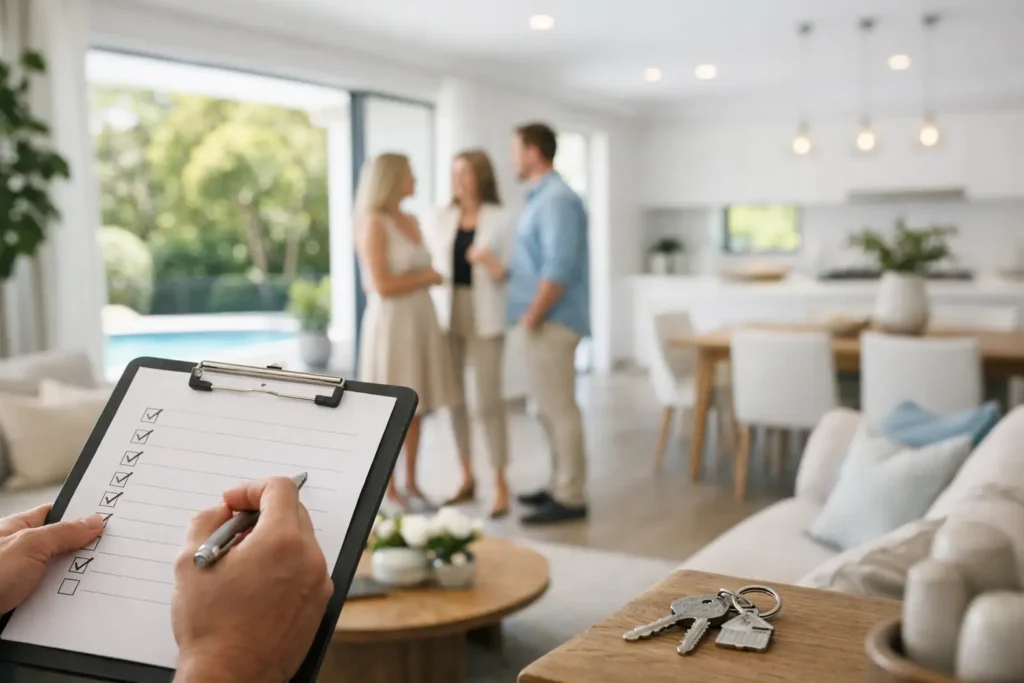
Buyers form an opinion before they reach the front door. The state of the garden, the smell at the entry and whether the home feels cared for all shape what they believe it is worth. This open home presentation checklist is designed to help Sunshine Coast sellers create the right first impression without wasting money on unnecessary upgrades.
The goal is not to make your house look like nobody lives there. It is to help buyers see the lifestyle, space and potential they are paying for. A well-presented property attracts stronger emotional interest, encourages buyers to stay longer and gives them fewer reasons to discount their offer.
Start with the buyer’s first 30 seconds
Stand on the street and look at your property as if you have never seen it before. Is the letterbox straight? Is there room for buyers to park? Does the front entry feel open, clean and easy to approach? Small details matter because they create an expectation for the rest of the inspection.
Mow, edge and water the lawn where needed. Remove weeds from garden beds, clear leaves from paths and pressure-clean visibly dirty driveways, patios and entry tiles. In coastal areas, salt residue, mould and weathering can make an otherwise well-kept home look neglected. Address it before photography and before the first open home.
The front door deserves particular attention. Clean the glass, wipe down the handle and make sure the door opens smoothly. If the paint is chipped or tired, a fresh coat can be one of the best-value presentation jobs you do.
Your open home presentation checklist
Make every room easy to understand
Buyers should not have to work out how a room is meant to function. If a spare room is serving as a storage space, home gym and office, choose one purpose for inspection day. A simple desk and chair tell a clearer story than stacked boxes and exercise equipment.
Remove excess furniture, especially from living rooms, bedrooms and hallways. This is not about making the house feel empty. It is about creating clear walkways and allowing buyers to appreciate the proportions of each room. If a large lounge cuts off access to a window or makes the room feel cramped, move it out temporarily.
Keep benchtops mostly clear. In the kitchen, one or two attractive items are enough. Put the toaster, mail, charging cables, dish rack and cleaning products away. Buyers are looking at storage, preparation space and condition, not your morning routine.
Clean beyond the obvious
A clean home signals careful ownership. Buyers often look closely at kitchens, bathrooms, windows, light switches and flooring because these areas reveal the level of maintenance behind the presentation.
Give bathrooms a proper clean rather than a quick tidy. Remove personal toiletries, clean shower screens, polish taps, replace worn towels and close the toilet lid. Check the silicone around showers and baths. If it is mouldy or damaged, replacing it is usually inexpensive and can improve the room immediately.
Clean windows inside and out where possible, including tracks and flyscreens. Sunshine is a major selling point across the Coast, but dirty glass can make a bright room look dull. Open blinds and curtains to let natural light do the work.
Do not mask odours with heavy air fresheners. Buyers can be suspicious of an overpowering scent. Instead, air the home out, empty bins, clean pet areas and deal with the source of any damp, cooking or smoke smell. A light, neutral scent is fine, but fresh air is better.
Control clutter and personal items
Clutter makes rooms look smaller and distracts buyers from the property itself. Pack away excess books, children’s toys, paperwork, magnets, shoes and items stored on top of cupboards. Clear the laundry, garage and outdoor storage areas as much as practical. Storage is a major decision point, and overcrowded cupboards suggest there is not enough of it.
Personal photographs and highly individual collections do not need to disappear completely, but reduce them. Buyers need to imagine their own family, furniture and routines in the home. Giving them that mental space matters.
Valuables, medication, important documents and spare keys should be secured before every inspection. This is simple common sense, particularly when several groups are moving through the home at once.
Set the temperature, light and atmosphere
A hot, dark house will not show at its best, regardless of the view or floorplan. Before the open home, open curtains, lift blinds and turn on lights in darker rooms. Check that every globe works and that light fittings are free of dead insects and dust.
Use air conditioning, ceiling fans or open windows according to the weather. On a humid Sunshine Coast afternoon, a cool, comfortable home can make a real difference to how long buyers stay. On a cooler day, avoid making the home feel shut up or stale.
Keep music low or skip it altogether. Buyers need to talk with each other, listen to the agent and take in the property. The home should feel calm, not staged for a party.
Give outdoor spaces a clear purpose
Outdoor living is not an afterthought in this market. A courtyard, balcony, pool area, deck or acreage outlook can be the feature that separates your home from another listing. Present it accordingly.
Sweep outdoor areas, clean outdoor furniture, remove cobwebs and make sure pool fencing and gates are tidy and functioning correctly. If the barbecue area is part of the appeal, clean it. If there is an established garden, trim it so windows, paths and views are not blocked.
For homes with pools, check water clarity, remove leaves and store pool equipment neatly. For acreage or larger blocks, focus on the areas buyers will first see: access, fencing near the house, sheds, entertaining areas and the immediate grounds. You do not need to make every corner of a large property look like a display home, but buyers must be able to see that the land is manageable and cared for.
Prepare for inspection day, not just photography
Photography creates enquiry. The open home is where buyers test whether the property lives up to the campaign. Keep the standard consistent between the photo shoot and every inspection.
On the morning of an open home, make beds, empty bins, wipe kitchen and bathroom surfaces, open the home up and do a final walk-through. Check for pet hair, wet towels, dirty dishes and laundry on airers. Park cars away from the driveway if possible, particularly if parking is a selling point.
Pets should be out of the house during inspections where practical. Even friendly animals can create noise, odour or uncertainty for buyers. Their bowls, litter trays and bedding should also be removed or made discreet.
Leave during the open home. Sellers who stay often mean well, but buyers tend to speak more freely and inspect more thoroughly when the owner is not present. Your agent can handle questions, gather feedback and keep the conversation focused on the home’s value.
Spend where it will change perception
Not every property needs major styling or renovation. The right level of preparation depends on the expected sale price, the target buyer, the condition of competing homes and how much furniture you already have. A newer apartment may only need decluttering, cleaning and professional photography. An older family home may benefit from painting, garden work, minor repairs and partial styling.
Avoid spending heavily on improvements that do not match the likely buyer’s expectations or the surrounding market. Replacing every kitchen cabinet may not deliver a return if the buyer is purchasing the land, location or renovation opportunity. On the other hand, repairing a leaking tap, damaged screen door or peeling fascia is not optional. Buyers notice unfinished maintenance and usually assume there is more behind it.
A good local agent will be direct about the difference. The best presentation plan is not the most expensive one. It is the one that removes objections and puts your home in the strongest position against current competition.
Before the next open home, take ten minutes to walk from the kerb to the back fence with a buyer’s eyes. If something looks tired, crowded, dirty or difficult to understand, fix it or simplify it. That disciplined final check can be the difference between a pleasant inspection and a buyer deciding your property is the one they do not want to miss.
About the Author
Rudi du Preez is one of the Sunshine Coast's top real estate agents and director of du Preez Property Group at Amber Werchon Property. A 25-year local with 250+ properties sold, specialising in Buderim, Nambour and the Sunshine Coast hinterland.
Get a Free Appraisal