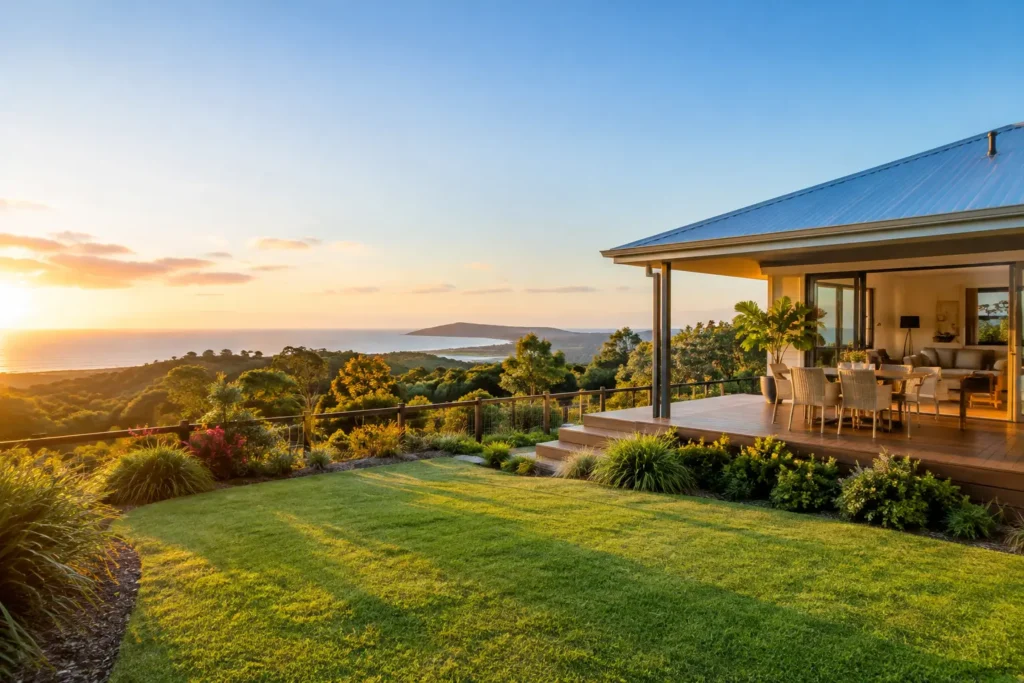
A lifestyle property can look perfect at 10am on a sunny Saturday, then reveal its real character after heavy rain, on a busy school morning, or during a long dry spell. That is why this Sunshine Coast lifestyle property guide starts with practical questions, not glossy photos. Whether you are moving to acreage, buying a coastal home with room for the boat, or preparing to sell a rural-residential property, the details behind the lifestyle matter.
The Sunshine Coast offers genuine variety. You can be close to the beach at Buderim, enjoy larger blocks around Tanawha and Doonan, or choose the privacy and views of hinterland areas such as Maleny, Montville and Mapleton. Each option brings a different set of costs, responsibilities and buyer expectations.
Define the lifestyle before choosing the property
“Lifestyle property” means different things to different buyers. For one family, it is a level block, a pool and a shed within an easy drive of schools and work. For another, it is several acres, space for horses or hobby farming, a dam and no close neighbours. The wrong purchase usually happens when buyers focus on the land size or the view before deciding how they will actually live there.
Start with the non-negotiables. Consider the maximum acceptable commute, access to schools and shops, the amount of maintenance you are prepared to take on, and whether the property needs to support pets, vehicles, equipment or a home business. A beautiful five-acre block is not necessarily a good fit if weekends are already full and the garden, fencing and driveways will become another job.
It also pays to think ahead. Young families may value usable outdoor space and safe access more than a steep, heavily treed parcel of land. Downsizers may want privacy without the ongoing physical work of acreage. Investors should assess the depth of likely tenant demand rather than assuming every lifestyle feature will produce a rental premium.
Sunshine Coast lifestyle property guide: assess the land
The land is often the asset that sells the dream, but it also creates the biggest variables. Two properties with the same acreage can offer completely different utility and value.
Slope, drainage and usable area
Do not judge a block by its total size alone. Ask how much is level or gently sloping, how much can be maintained, and whether there are usable areas for gardens, children, animals, sheds or future improvements. Steep land can deliver outstanding views and privacy, but mowing, access and building works may be more expensive.
Walk the property rather than viewing it only from the house. Look for drainage lines, retaining walls, erosion, water pooling and signs of previous runoff. During inspections, ask the owner or agent how the property performs in sustained rain. A seasonal creek can be attractive, but it may affect access and usable land at certain times of year.
Water, wastewater and services
Town water, rainwater tanks, dams, bores and on-site wastewater systems all need clear understanding. If a property is not connected to standard services, find out exactly what is in place, its capacity, maintenance requirements and recent servicing history.
Water security is not a minor detail for acreage buyers. It affects gardens, livestock, fire preparedness and everyday household use. Likewise, septic and wastewater systems should be inspected properly, particularly where there are multiple dwellings, guest accommodation or plans to expand.
Mobile reception and internet quality deserve the same attention. A quiet rural setting is appealing until remote work, school needs or basic communication become difficult. Test reception at the house, shed and likely work areas instead of taking broad coverage claims at face value.
Access, roads and easements
A long driveway can feel private and impressive. It can also be costly to maintain and difficult in wet weather. Check the condition of the access road, driveway gradients, turning space for deliveries and emergency access. If there is a shared road or access arrangement, understand who maintains it and how costs are handled.
Easements, encumbrances and zoning can affect where you build, what you can clear and how you use the land. This is where proper contract review and specialist advice are worth the effort. Do not make assumptions based on what a neighbour has done or what appears possible from the street.
Inspect the house as a working property
Lifestyle homes tend to have more moving parts than a standard suburban residence. There may be a pool, solar system, sheds, pumps, water tanks, retaining structures, gates, fencing, air-conditioning, fireplaces or additional accommodation. Each feature can add value when it is well maintained, or become an expensive issue when it is not.
A thorough building and pest inspection is essential, but buyers should also inspect practical systems. Check the age and condition of roofs, decks, drainage, tanks and pumps. Open shed doors, look at floors for moisture, and ask whether electrical supply is adequate for workshop equipment or future additions.
Where a property has a second dwelling, studio or granny flat, confirm that approvals and use arrangements are in order. Buyers are often drawn to the income or family flexibility these spaces offer, but that value depends on what is lawful and practical, not just what has been advertised.
Know what drives value in each location
Lifestyle property pricing is not simply a matter of bedrooms, bathrooms and land size. In the Sunshine Coast market, buyers often pay more for usable land, reliable water, privacy, quality improvements, views, proximity to key services and an easy connection to the coast or major centres.
However, a premium feature only works if the buyer pool values it. A large machinery shed may be a major drawcard for an acreage buyer and barely register with a family seeking a low-maintenance move. Equally, panoramic views can command a strong result, but access, slope and maintenance must not outweigh the benefit.
For sellers, this is why an accurate appraisal needs more than a quick comparison with nearby sales. The strongest sale strategy identifies the most likely buyer, presents the property around the benefits that matter to that buyer, and deals honestly with the trade-offs. Hiding a difficult driveway or a water limitation does not create a better outcome. It wastes time and weakens trust once buyers uncover it.
For buyers, comparable sales are a starting point, not a verdict. Compare improvements, position, usable land, services and condition carefully. A lower-priced property may need significant work. A higher-priced home may save years of expense and effort if its infrastructure is already in place.
Selling a lifestyle property without leaving money behind
Lifestyle buyers buy with emotion, but they make final decisions with confidence. Strong presentation should show the property at its best while making the practical case for ownership easy to understand.
Before going to market, sellers should organise key information: land size and boundaries, rates, water sources, wastewater details, approvals, recent maintenance, utility costs and any relevant documentation for solar, pools, sheds or additional accommodation. Clear information reduces uncertainty and gives serious buyers fewer reasons to hesitate.
Presentation needs to be purposeful. Mow accessible areas, trim overgrown entry points, repair obvious fencing and make sheds functional rather than storage zones full of forgotten items. If the property has a view, a dam, productive garden or quality outdoor entertaining area, make sure buyers can see and experience it during inspections.
Pricing requires discipline. An inflated asking figure can stall enquiry and make a property look stale, particularly where the buyer pool is specialised. Underquoting is no better if it creates the wrong expectations. The goal is to generate genuine competition among qualified buyers and negotiate from a position of strength.
A local agent who understands the differences between coastal, suburban and acreage markets can make a material difference here. du Preez Property Group takes a direct approach: identify the property’s real advantages, market them properly, qualify buyers and negotiate for the best price rather than the quickest convenient sale.
Take your time where it counts
The best lifestyle property is not always the biggest block, the highest view or the closest house to the beach. It is the one whose upkeep, access, services and location fit the life you want to lead and the budget you can carry comfortably.
Ask direct questions, inspect beyond the presentation, and get proper advice before the contract becomes binding. If you are selling, give buyers the same clarity you would expect when making a major move. That straight-talking preparation is what turns a lifestyle dream into a decision you can stand behind.
About the Author
Rudi du Preez is one of the Sunshine Coast's top real estate agents and director of du Preez Property Group at Amber Werchon Property. A 25-year local with 250+ properties sold, specialising in Buderim, Nambour and the Sunshine Coast hinterland.
Get a Free Appraisal