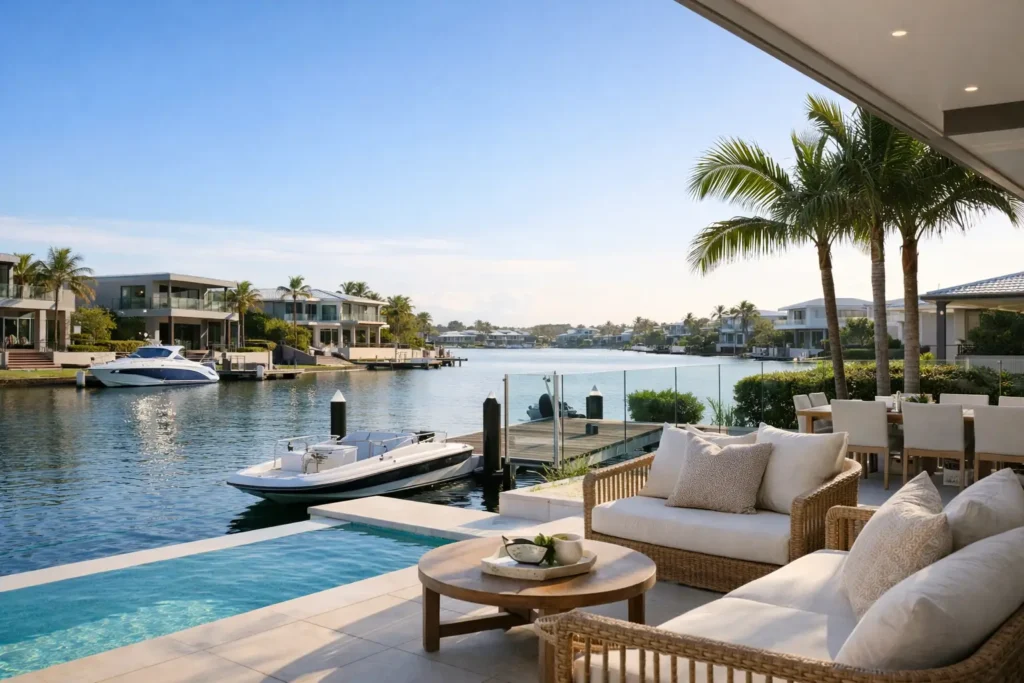
A waterfront address can attract immediate attention, but attention alone does not deliver the best price. To market a waterfront home effectively, sellers need to present the lifestyle clearly, price it with discipline and put the property in front of buyers who understand what makes the position valuable. A canal home in Minyama, an ocean-view property in Buderim or a beachfront residence near Mooloolaba may all be called waterfront, but each appeals to a different buyer and deserves a different sales strategy.
The no-bullshit truth is this: buyers will not pay a premium simply because the word “waterfront” appears in an online listing. They pay for the quality of the outlook, access to the water, privacy, usable outdoor areas, the condition of the home and confidence that they are buying well. Your campaign needs to make those benefits obvious from the first photo through to the final negotiation.
Start with the Waterfront Feature Buyers Will Pay For
“Waterfront” is a broad label. Before marketing begins, identify the property’s strongest genuine point of difference. It might be direct sandy beach access, a wide canal frontage, deep-water mooring potential, a protected outlook, river views, cooling sea breezes or a walkable coastal lifestyle.
Specificity matters because serious buyers compare homes closely. If a property has pontoon access, buyers will want to know the frontage, water depth where relevant, bridge clearances, whether the pontoon is approved and what type of vessel access is practical. If the appeal is ocean views, they will assess how much of the view is visible from the living areas, bedrooms and outdoor entertaining space – not just from one carefully framed balcony photograph.
A strong campaign does not exaggerate. It highlights what is exceptional and deals honestly with the practical details. That approach protects credibility when buyers inspect, ask questions and make an offer.
Price a Waterfront Home on Evidence, Not Emotion
Waterfront owners understandably value their position. Many have chosen the property for the same reasons a future buyer will: outlook, lifestyle, scarcity and the feeling of being connected to the coast. But personal attachment is not a pricing strategy.
The right guide price should be based on recent local sales, current competition and the features buyers are paying for in that specific segment. A renovated canal-front home should not be measured against a dated property on a busier stretch of water. Equally, a beautiful renovation does not automatically overcome limitations such as road noise, restricted outlooks, poor water access or a small usable yard.
Pricing also depends on market conditions. If there are few comparable waterfront homes available, a carefully managed campaign can create competitive tension. If several similar properties are listed at once, your home needs a sharper point of difference and a price position that earns inspections early.
An inflated price can be costly. Waterfront buyers are often well researched, particularly those relocating from Brisbane, Sydney or Melbourne. They monitor listings, study sold results and recognise a property that has sat too long. The first weeks on market are when curiosity is highest, so the launch price must invite serious engagement rather than leave buyers waiting for a reduction.
Make the Lifestyle Visible Before the Inspection
Waterfront property marketing must sell the experience, not just the building. Professional photography is essential, but it needs to do more than show blue water in the background. The images should demonstrate how the home lives: morning light over the water, sightlines from the kitchen, room around the pool, a covered terrace for entertaining and easy movement between indoor and outdoor spaces.
Timing is critical. A photo shoot on a dull day, at low tide or during poor weather can flatten a property’s appeal. The best time depends on the orientation and setting. East-facing homes may look their best early, while western water views can suit late-afternoon photography. Twilight images can be powerful when the home has quality outdoor lighting, a pool or a view that becomes more dramatic at sunset. They are not a substitute for clear daytime photography, though. Buyers still need to see the outlook honestly.
Video is particularly useful for waterfront homes because it provides context that still images cannot. A well-shot walkthrough can show the approach to the home, the connection between living spaces and the water, the scale of the frontage and the surrounding lifestyle. Drone footage can add value where it genuinely clarifies location, proximity to the beach, boating access or the outlook. It should never be used to make a distant water glimpse look like direct frontage.
Before the camera arrives, tidy the external areas as carefully as the interiors. Clean glass, pool surrounds, decks, pontoons and outdoor furniture. Trim back planting that blocks valuable views, provided it can be done appropriately. Remove tired cushions, bulky pool equipment, bins and anything that distracts from the water. A waterfront buyer is purchasing a feeling, and clutter weakens it quickly.
Target the Right Buyers, Not Just the Biggest Audience
The buyer for a waterfront home is not always a local family looking for an extra bedroom. It may be a downsizer wanting low-maintenance coastal living, a boating enthusiast, an interstate lifestyle mover, an investor seeking a high-quality holding, or a family that wants beach access and space to entertain.
That is why the marketing message must match the likely purchaser. A deep-water property should lead with boating practicality and lifestyle. An apartment with ocean views may need to focus on lock-up-and-leave convenience, walkability and low-maintenance living. A family home near the beach should show how everyday life works, including storage, parking, outdoor space and proximity to schools, cafés and services.
Broad online exposure is important, but it is only one part of the job. A capable agent should also directly contact qualified buyers already looking for a comparable home. These are the people who have inspected other properties, understand the price bracket and may act quickly if the right opportunity appears. Personal buyer matching is often where a campaign moves from interest to competition.
Prepare for the Questions That Can Slow a Sale
Waterfront buyers tend to be thorough, and they should be. They may ask about flooding history, drainage, erosion, insurance, body corporate obligations, mooring approvals, seawalls, maintenance responsibilities, holiday letting rules or planned development nearby. The exact questions depend on the property, but being prepared prevents doubt from taking hold.
Gather relevant documents and information before launch. This may include building approvals, pool compliance records, rates notices, lease arrangements where applicable, body corporate information for apartments or townhouses, and details of major upgrades. If there are practical considerations around the waterfront edge, have clear factual information ready rather than relying on vague assurances.
Transparency does not weaken a sale. It builds trust and helps separate genuine concerns from routine buyer due diligence. When a buyer feels they have been given straight answers, they are more likely to negotiate seriously.
Use Inspections to Build Emotional and Commercial Value
The best waterfront inspections are calm, well prepared and timed to show the home at its best. Open blinds, clear the decks, set up the outdoor entertaining area and make sure the home feels comfortable rather than over-styled. If the property catches a prevailing breeze or has a standout sunset, those details should be experienced where possible.
During inspections, the conversation should connect features to value without overselling. Explain the practical benefit of the side access, the quality of the pontoon, the sheltered entertaining area or the distance to the surf. Then give buyers room to take in the setting. Waterfront homes often create an emotional response, and a rushed inspection can cut that short.
A private inspection may be the right approach for some premium homes where privacy matters or buyers need more time. In other cases, well-managed open homes can create visible demand. It depends on the property, the likely buyer pool and the campaign strategy.
Negotiate the Whole Deal, Not Just the Headline Price
A strong offer is more than a number. Finance clauses, building and pest conditions, deposit size, settlement timing, inclusions and access arrangements can all affect the certainty and value of the transaction. Waterfront properties can involve more detailed due diligence, so clear communication after an offer is made is essential.
The role of the agent is to keep qualified buyers engaged, protect the seller’s position and create competitive tension where genuine interest exists. That requires timely follow-up, honest feedback and firm negotiation – not inflated promises or pressure tactics that fall apart when the contract is presented.
At du Preez Property Group, the focus is on giving sellers straight advice from appraisal through to settlement, because premium outcomes come from preparation and negotiation, not wishful thinking.
A waterfront home is a rare asset, but rarity needs to be explained, shown and defended throughout the campaign. Get the presentation right, price it against real evidence and choose an agent who knows how to turn genuine buyer interest into a confident, well-negotiated sale.
About the Author
Rudi du Preez is one of the Sunshine Coast's top real estate agents and director of du Preez Property Group at Amber Werchon Property. A 25-year local with 250+ properties sold, specialising in Buderim, Nambour and the Sunshine Coast hinterland.
Get a Free Appraisal