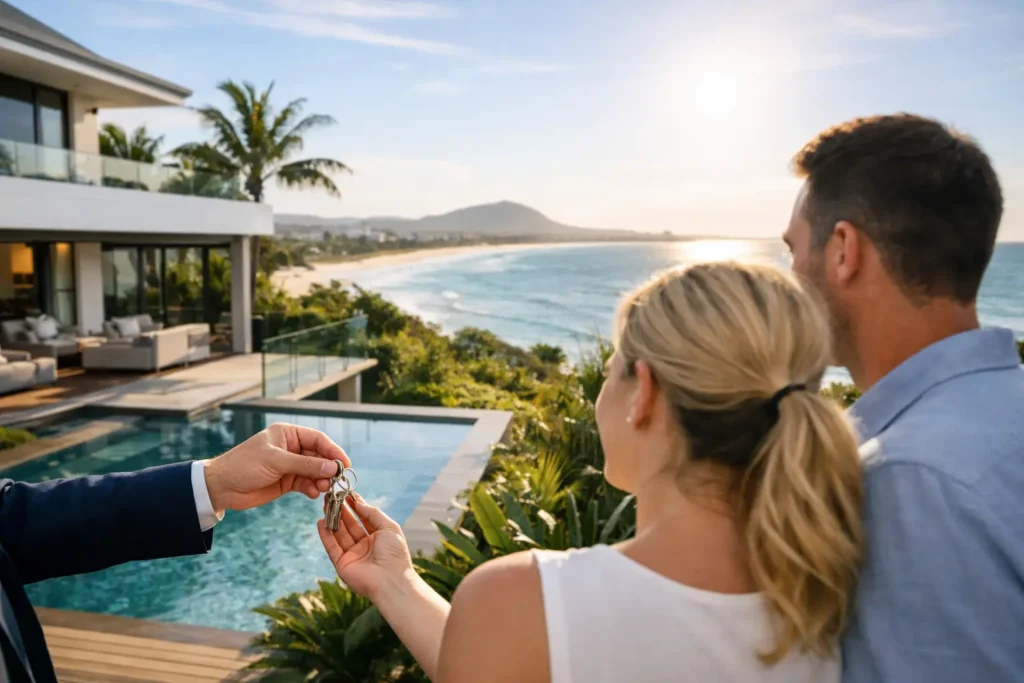
A buyer knocks on the door with an offer before your home is advertised. Or an agent says they have several qualified people waiting for a property just like yours. It sounds efficient, private and appealing. But Sunshine Coast off market sales can either be a smart, controlled strategy or a costly shortcut that leaves serious money on the table.
The difference comes down to one question: will selling privately create enough genuine competition for your property? A strong offer is not automatically the best price. In real estate, the best result usually comes when more than one capable buyer wants the same home at the same time.
What is an off market sale?
An off market sale is a property transaction completed without a full public campaign. The home may be offered quietly to an agent’s buyer database, selected local contacts, neighbours, or buyers who have recently missed out on similar homes. It is sometimes called a private sale, silent sale or pre-market sale.
That does not mean the property is invisible. A well-managed off market campaign still needs a clear price strategy, quality presentation and direct communication with buyers who are genuinely active. The key difference is that it is not promoted broadly through the usual public property portals, social media advertising, signboards and open homes.
For some sellers, that discretion is valuable. For others, it limits the very exposure that creates leverage at the negotiating table.
When Sunshine Coast off market sales make sense
Off market selling is not a second-rate option by default. It can be the right move when there is a clear reason to protect privacy, control access or move quickly without sacrificing buyer quality.
A homeowner may be managing a separation, a family matter, a tenancy, or a work relocation and not want neighbours, colleagues or passers-by tracking every step. Owners of acreage homes, prestige properties and tightly held lifestyle residences may also prefer to speak only with buyers who have the financial capacity and genuine intent to proceed.
It can also work well when there is a highly specific buyer pool. A renovated waterfront apartment in Mooloolaba, a family home in Buderim, or a well-located acreage holding near the hinterland may match buyers an experienced local agent is already speaking with. If those buyers have been actively searching, have missed out elsewhere and understand current values, a quiet approach can produce a clean and compelling offer.
Timing matters too. Sometimes a seller wants to test buyer interest before committing to a full campaign. This can provide useful feedback on price, presentation and demand. But it should be treated as a defined test, not an open-ended arrangement that allows a property to drift quietly for months.
The risk: one buyer rarely pays like two
The biggest risk with an off market sale is simple: a buyer who knows they have little competition is less likely to stretch.
Buyers are not paying for your memories, renovations or future plans. They are weighing alternatives. When your home is publicly marketed well, a buyer can see other people inspecting, asking questions and preparing to act. That urgency often changes the conversation from “What is the lowest price I can secure it for?” to “What do I need to do to win it?”
Without that competitive pressure, negotiations can become slower and more buyer-led. An offer might look attractive because it saves time and avoids the effort of a campaign, but the true cost may be far greater than the saving. Accepting $30,000 or $50,000 below what a properly exposed market would have delivered is not a private-sale success.
There is also a danger in relying solely on an agent database. Databases are useful, but they are not the whole market. The best buyer for your property might be interstate, newly qualified, moving from another Sunshine Coast suburb, or searching online after a change in circumstances. If they never see the home, they cannot compete for it.
Privacy should not mean a weak sales process
If you choose to sell off market, the process still needs discipline. Start with an accurate appraisal based on recent comparable sales, current listings, buyer demand and the individual strengths of your property. Avoid inflated estimates designed to win your listing, but do not let convenience become an excuse for underpricing either.
Your agent should then identify the likely buyer profile. Is the strongest prospect a local downsizer, a Brisbane-based lifestyle buyer, a family looking for school access, or an investor focused on rental appeal? The answer shapes who is contacted and how the opportunity is positioned.
Presentation remains important. Your home should be inspection-ready, professionally photographed if appropriate, and supported by the details a serious buyer needs to make a decision. A private campaign does not mean casual phone photos, vague information or poorly managed inspections. It means selective exposure, handled properly.
Set a timeframe before the first buyer is approached. For example, you may agree to offer the property privately to qualified buyers for a short period, then move to a full public campaign if there is no acceptable offer. This keeps control with you and prevents your property becoming stale within the buyer network.
How to judge an off market offer
A credible offer is more than a number on a page. Look at the buyer’s financial position, proposed deposit, settlement date, conditions and willingness to negotiate. A high offer with lengthy finance clauses, an uncertain sale of another property or excessive special conditions may not be as strong as a slightly lower, cleaner offer.
Just as importantly, ask what evidence supports the price. Has the buyer inspected comparable homes? Are they responding to genuine value, or simply testing whether a seller wants an easy exit? A good agent will give you direct advice, including when an offer is worth accepting and when it is not.
Before signing, consider whether enough qualified buyers have had the opportunity to inspect. If only one or two people know the property is available, you may not have tested the market at all. You have simply negotiated with a limited audience.
This is where strong negotiation matters. The goal is not to pressure a buyer for the sake of it. It is to create a fair process that exposes their true level of motivation while protecting your financial outcome. That may involve a best-and-final offer process, a deadline, or a decision to take the property public if the offer does not reflect its real market position.
The best strategy is the one that protects your price
There is no universal answer. A discreet off market sale can be ideal for an owner who values privacy and receives a strong, well-supported offer from a ready buyer. It can also be a sensible first step where there is clear demand for a particular style of property.
But if your priority is maximum price, broad competition usually gives you the strongest chance of achieving it. A public campaign reaches buyers beyond any one database, builds momentum and provides proof that your home is being offered to the full market.
The practical approach is to decide before you start what success looks like. Is privacy non-negotiable? Do you need a fast settlement? Is there a price you would confidently accept without going public? Once those boundaries are clear, the selling method becomes a business decision rather than an emotional one.
At du Preez Property Group, the advice should be straightforward: sell quietly only when the strategy serves your outcome, not because it is easier for an agent. Your home deserves a process that creates confidence, protects your position and gives you every reason to believe you achieved the best available result.
About the Author
Rudi du Preez is one of the Sunshine Coast's top real estate agents and director of du Preez Property Group at Amber Werchon Property. A 25-year local with 250+ properties sold, specialising in Buderim, Nambour and the Sunshine Coast hinterland.
Get a Free Appraisal